
Grasshopper UK User Group Meeting | October 2026

Join Simply Rhino at Foster + Partners on Thursday 29th October 2026 for the next Grasshopper UK User Group Meeting.

Foster + Partners are the kind hosts for the fourth Grasshopper UK User Meeting of 2026, organised by Simply Rhino. The evening’s presentations will commence with a team from Foster + Partners and then we’ll have invited guests from ShapeDiver and NodePen.
The meeting will follow our popular format of presentations, with Q&A, followed by time for conversations for all at the end of the meeting.
- Meeting Date: Thursday 29th October 2026
- Time: 18:30-20:30 (the meeting will start promptly at 18:30)
- Location: Foster + Partners – The Pantry, 39 Parkgate Road, London, SW11 4NP
- How to find The Pantry: Use What3Words ///forgot.memory.violin
- Book to join us: You can book your place using the button above. Places are free but must be booked in advance.
Meeting Introduction
Meeting welcome with Paul Cowell from the Grasshopper UK Meeting organisers, Simply Rhino.
Presentation 1 | Beyond SIMCity: The Next Generation of Designer-Led Tools
Oscar Borgström, Marcin Kosicki, Wojciech Karnowka and Paul Shaju – Foster + Partners
Eidos is a platform created at Foster + Partners for developing, deploying and managing applications across multiple hosts. Eidos treats access for AI agents as a core capability both during development and usage. It abstracts much of the overhead of creating a new application, including UI, deployment and authentication, while retaining the flexibility needed for bespoke design tools. Applications built with Eidos can be distributed as standalone desktop tools or integrated directly within software such as Rhino and Revit.
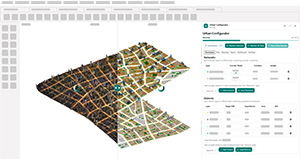
The session introduces Eidos through the Urban Configurator, an application built to extend what urban designers can do. It captures their experience, knowledge and design guidelines as agent-readable skills covering site constraints, density, massing and typologies, so that their expertise shapes every option the system generates. Designers stay in the lead, using the tool and supporting agentic systems to explore more options, track key performance criteria and make better-informed decisions faster.


Oscar Borgström – Oscar is an Associate Partner in the Applied R+D team at Foster + Partners, where he creates computational tools that underpin performance-driven design workflows. His work includes solutions for view analysis, environmental simulation, rendering, and artificial lighting, such as Cyclops, a GPU-powered analysis engine that accelerates ray-tracing analyses.

Marcin Kosicki – Marcin is an Associate Partner at Foster + Partners within the Applied R+D team. He specialises in complex geometry, computational and performance-driven design, contributing to numerous high-profile projects, including the MOL Group Headquarters, the New Central Polish Airport, the KSA Osaka Expo Pavilion, and the Mayo Clinic Hospital. His current research focuses on Hydra, an in-house optimisation platform; the development of agentic AI-driven design tools and methodologies; and design strategies for future built environments where humans and autonomous robotic systems coexist. He is a published researcher, international speaker, and lecturer at UCL’s Bartlett School of Architecture.

Wojciech Karnowka – Wojciech is an Associate in the Applied R+D team at Foster + Partners, where he develops computational tools and digital pipelines for complex architectural projects. Since joining the team in 2023, he has contributed to bespoke, performance-driven design products supporting projects across the practice. His work focuses on complex geometry, digital workflows, and scalable computational solutions that help design teams address project-specific challenges more efficiently.

Paul Shaju – Paul is an Associate and Senior Frontend Engineer at Foster + Partners, leading development of internal platforms for creating, deploying, and managing design applications across multiple hosts. He focuses on simplifying UI, deployment, and authentication so design, analysis, and computational workflows can become accessible standalone tools or integrations for software including Rhino and Revit. With over eight years’ experience across enterprise learning, health-tech, education, and architecture, Paul specialises in React, TypeScript, and full-stack architecture across web, spatial computing, and integrated platforms.
Links:
Foster + Partners website
LinkedIn: Oscar, Marcin, Wojciech, Paul.
Presentation 2 | Grasshopper-powered agentic web applications.
Mathieu Huard – ShapeDiver

AI will not kill Grasshopper, but we need to rethink Grasshopper’s role within the new generation of tools and interfaces. A parametric model is a design generation tool, and it’s also a story: a structured space of possibilities, authored by experts, ready to be navigated. This talk shows how AI agents can be driven by definitions augmented with harnesses and tools to guide exploration, drive a contextual user experience, and chain algorithms together into richer, smarter design workflows.

Mathieu Huard is Co-Founder and Chief Product Officer at ShapeDiver, a cloud platform that turns Grasshopper definitions into parametric web applications. Since co-founding ShapeDiver in 2015, Mathieu has kept the pulse on evolving practices in the computational design field, from AEC to furniture, jewelry, and scan-to-print processes in the construction, footwear and medical industries.
Links:
Find Mathieu and ShapeDiver on LinkedIn
ShapeDiver website
Presentation 3 | NodePen: Multiplayer Grasshopper Meets Multiplayer Problems
Chuck Driesler – NodePen
For many of us, Grasshopper was our soft introduction to “hard” software development. And ever since, we’ve been dragging it, kicking and screaming, into new frontiers it was never meant to be used in. It’s one of the most honoured hallmarks of our community: if it has an API, we can make it work with Grasshopper.

But as we threw more plugins and people at Grasshopper, it stayed the same shape: a file on a hard drive somewhere. Where is the correct file? Who touched it last? What changed? Is it safe to work in right now? Not to mention the unholy spaghetti (seasoned by groups) that it all quickly becomes. These questions require more than adding components to Grasshopper… What if we also mod where it lives entirely?

In this talk, I show how bringing Grasshopper to the web allows us to collaborate better, without leaving behind the parts of visual programming that we love. Over a few case studies (some successful, some funny) we’ll look at how the web is the perfect home for building scripts together: people, agents, and otherwise.

Chuck Driesler is the developer of NodePen, bringing Grasshopper to the web for better collaboration, sharing, and pipeline integrations with your scripts. He’s been building with capsules and wires for years, previously at Speckle, Hypar, and Pollination Cloud. Currently based in London.
Links:
Find Chuck on LinkedIn
NodePen Website

The Grasshopper UK User Group Meetings are Organised by Simply Rhino


